

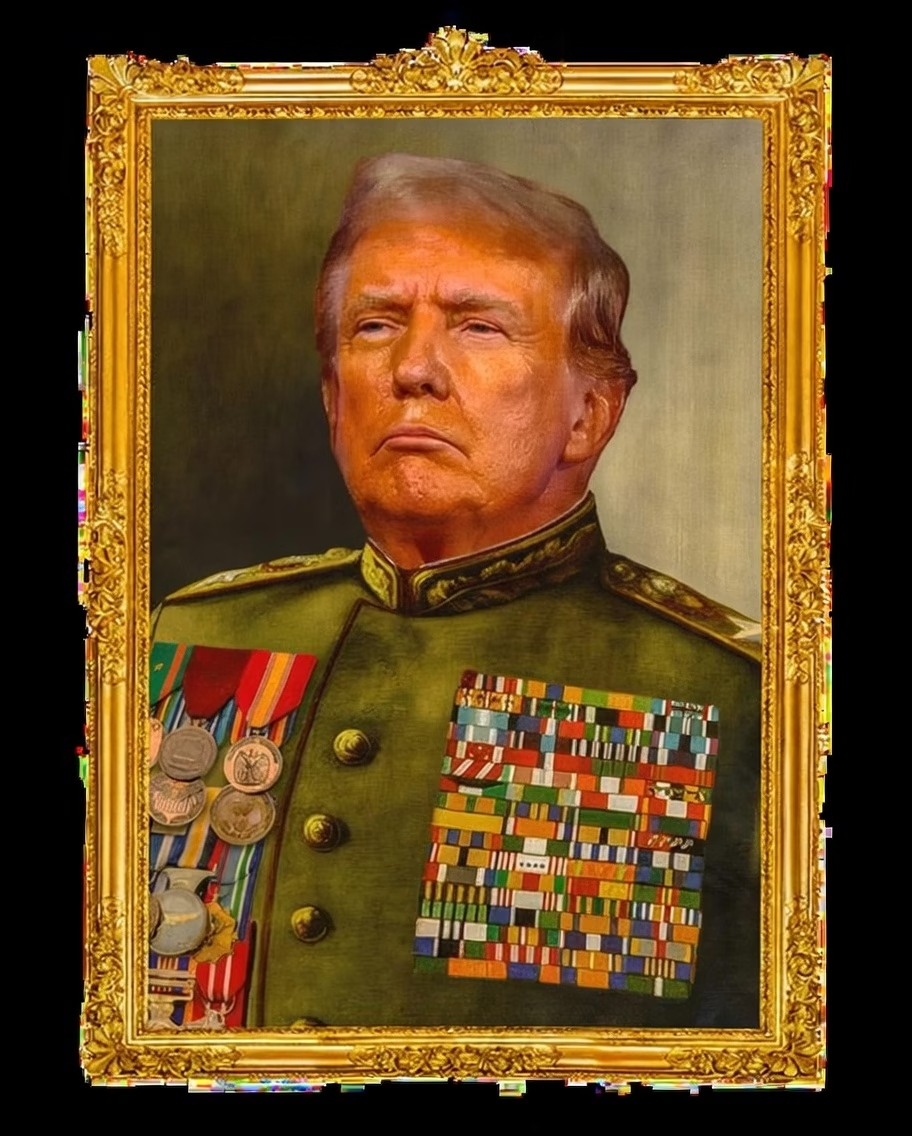
In a presidency already defined by chaos and overreach, Donald Trump’s latest fixation on seizing Greenland reveals the depths of his authoritarian instincts. Refusing to rule out military force or other coercive measures against a sovereign ally, Trump’s bellicose rhetoric isn’t just reckless—it’s a chilling blueprint for dictatorial behavior that undermines democratic norms and international alliances. As he warns NATO that its strength hinges solely on American whims, we must call this what it is: not bold leadership, but the tantrums of a would-be autocrat who views global relations as extensions of his personal vendettas.
Trump’s press briefing on Tuesday was a masterclass in evasion and intimidation. When pressed on how far he’d go to acquire Greenland—a Danish territory he covets for its strategic resources—he curtly replied, “You’ll find out.” This isn’t diplomacy; it’s the language of a strongman, dangling threats like a mob boss to keep allies off-balance. By linking his Greenland ambitions to petty grievances, such as his obsession with the Nobel Peace Prize, Trump exposes a dangerous fusion of ego and policy. In a letter to Norway’s prime minister, he brazenly tied his “peaceful” intentions to receiving the award, writing, “Considering your Country decided not to give me the Nobel peace prize… I no longer feel an obligation to think purely of Peace.” Such blackmail tactics erode the rule of law, treating international affairs as a personal scorecard rather than a shared commitment to stability.
Worse still is Trump’s cavalier attitude toward NATO, the bedrock of transatlantic security for over seven decades. He repeatedly boasted of single-handedly “strengthening” the alliance while implying he could dismantle it at will: “Whether you like it or not, it’s only as good as we are. If Nato doesn’t have us, Nato is not very strong.” When asked if he’d accept NATO’s breakup as the cost of grabbing Greenland, he dodged with vague assurances that “we will work something out where Nato is going to be very happy.” This isn’t statesmanship—it’s extortion. By threatening tariffs on European allies who oppose his colonialist dreams, Trump is weaponizing economic power to bully sovereign nations, plunging U.S.-EU trade into chaos and fracturing the very alliance he claims to have fortified. European leaders have rightly condemned this as “new colonialism,” a throwback to imperial eras that modern democracies have long rejected.
Trump’s dictatorial streak extends beyond foreign policy into a blatant disregard for institutions. He rambled about “settling eight wars” and deserving the Nobel, blaming Norway for his snub despite the prize being awarded by an independent committee. These delusions of grandeur aren’t harmless; they’re symptomatic of a leader who prioritizes self-aggrandizement over accountability. As the Supreme Court weighs the legality of his tariff abuses, Trump’s fallback—”I’ll have to use something else”—hints at even more unchecked escalations, from forcing referendums on Danish rule to outright military action. Options for acquiring Greenland are slim and ethically dubious, yet Trump presses on, heedless of the outrage from allies and the potential for new tensions within NATO.
This episode isn’t isolated—it’s part of a pattern. From his off-script rants about stolen elections to touting “365 achievements” in a marathon briefing, Trump governs like a dictator in denial, rewriting history and demanding unwavering loyalty. His Truth Social posts, including screenshots of texts from world leaders, smack of propaganda, designed to project invincibility while sowing division. As he jets off to Davos, one wonders if global leaders will confront this menace or appease it, fearing the “something else” he might unleash.
America and the world cannot afford another term of this authoritarian theater. Trump’s Greenland obsession isn’t about national security—it’s about unchecked power. If we fail to criticize and constrain such behavior now, “you’ll find out” might become the epitaph for democratic alliances everywhere. It’s time to reject the dictator’s playbook and demand leadership rooted in principle, not petulance.